Tenerife, like the rest of the Canary Islands, is facing a problem we are still refusing to properly name: over-tourism.
What makes this so tragic is not just the scale of the problem, but our collective failure to recognise it—and to act—while there is still time.
If we continue on our current path, we are not protecting Tenerife for the next 10 or 20 years. We are actively dismantling what makes these islands special.
The Illusion of Success
Tourism numbers are up. Headlines celebrate growth. Politicians applaud “record years.”
But beneath those numbers is a system under strain—environmentally, socially, and culturally.
Growth alone is not success.
Quality, balance, and resilience are.
Right now, we are prioritising volume over value, speed over sustainability, and short-term profit over long-term survival.
Environmental Costs We Can No Longer Ignore
The natural resources that define Tenerife are being pushed beyond their limits:
- The ocean suffers from untreated or poorly treated sewage, leading to E. coli outbreaks and beach closures.
- Water scarcity worsens while tourism infrastructure continues to expand.
- Soil and land are overdeveloped, sealed under concrete instead of supporting agriculture or ecosystems.
- Air quality and traffic deteriorate as roads become saturated beyond capacity.
These are not abstract environmental concerns—they are warning signs of system failure.
Yet where is the serious investment in sewage infrastructure?
Where is the pause on construction?
Where is the long-term environmental planning?

Social Breakdown Hidden in Plain Sight
Over-tourism isn’t just about nature—it’s about people.
Housing has become one of the Canary Islands’ most severe social crises. Holiday rentals continue to expand while local people are pushed out of their own communities. Laws intended to regulate short-term rentals are weak, inconsistently enforced, or ignored altogether.
At the same time, squatting has become a real and growing issue, creating insecurity for homeowners and further distorting the housing market.
Traffic congestion, overstretched public services, and declining quality of life are now normalised. We’re slowly getting used to things that should alarm us—rubbish in the streets, delays everywhere, declining standards.
That acceptance may be one of the most dangerous consequences of all.

When Over-Tourism Lowers Standards Everywhere
A less discussed effect of over-tourism is how it degrades service quality and business ethics.
When demand is guaranteed, standards slip.
Businesses no longer need to compete on quality, value, or service—because customers have no alternatives. Delays, overcharging, understaffing, and poor experiences become normal.
This isn’t limited to tourism. Even essential services—garages, trades, logistics—are overwhelmed and overextended. The result is a captive audience paying more for less, while frustration grows on all sides.
This is not a healthy economy.
It’s a stressed one.
Culture Replaced by Consumption
Tenerife’s cultural identity is being diluted.
Instead of investing in Canarian culture, heritage, food, farming, and traditions, we continue to replicate the same attractions found everywhere else: water parks, go-kart tracks, jet skis, and high-impact entertainment with little connection to place.
What we should be promoting instead is already here:
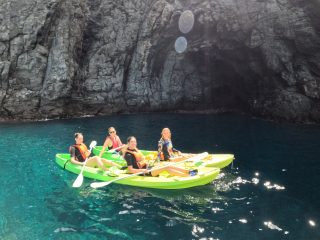
- Snorkelling and marine appreciation
- Surfing and ocean sports
- Hiking, nature, and volcanic landscapes
- Paragliding, stargazing, and low-impact adventure
- Local food, farming, and produce
- Authentic cultural experiences rooted in Canarian life
These are the experiences that create respect for the islands—not exploitation of them.
The Capitalist Hamster Wheel
We seem trapped in a system that can’t slow down.
Everyone keeps running:
- Governments chase growth figures
- Businesses chase short-term profit
- Tourists chase cheap experiences
- Locals feel powerless to intervene
No one is truly planning for 10 or 20 years from now.
What happens when water becomes even scarcer?
When beaches close more often?
When the island’s reputation shifts from paradise to problem?
By then, it will be far more expensive—and possibly impossible—to fix.
Canary Green: Pushing Against the Status Quo
At CanaryGreen.org, this reality is deeply frustrating.
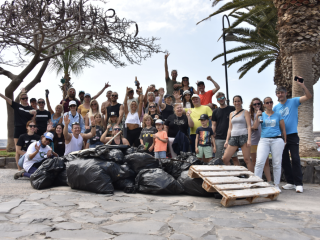
For five years, Canary Green has worked to promote cultural change and sustainable tourism with almost no financial support—not from local businesses, not from tourists, not from government.
Instead of being supported as part of the solution, organisations like Canary Green are often treated as obstacles to “progress.”
But real progress is not endless growth.
Real progress is protection, balance, and responsibility.
If we fail to support initiatives that care about the long-term future of these islands, we are choosing short-term comfort over long-term collapse.
A Call for a Reset
Tenerife does not need more tourists at any cost.
It needs better tourism, managed tourism, and tourism that gives back more than it takes.
That means:
- Serious investment in sewage and infrastructure
- Strong regulation of holiday rentals
- A pause and rethink on uncontrolled construction
- Support for renewable energy, farming, and local produce
- A shift from quantity to quality tourism
- Funding and backing for sustainability organisations
- Political courage to say: enough
Most of all, it means recognising that this cannot continue.
Tenerife is still beautiful—but beauty is not infinite.
If we truly love these islands, now is the moment to protect them—before we look back and wonder why we didn’t act when we still could.